

Ever thought that a gentle approach might work better than strict rules? When you use positive training at home, you build trust and create a calm space where your pet listens happily. Simple steps like offering a treat and speaking kindly can show your furry friend which actions to repeat.
I’ve seen how a wagging tail and bright eyes can turn a training session into a fun time. In this guide, you’ll discover easy ways to make your home peaceful and happy. This way, training becomes a joyful adventure for both you and your beloved pet.
Implementing Core In-Home Positive Pet Training Techniques
Force-free pet training builds trust by using rewards instead of punishment. It relies on a science-based idea called operant conditioning (a way to help pets learn by giving a reward right after a desired action). When your pet sits and immediately gets a yummy treat, it quickly figures out that sitting means something good is coming. This kind of training is fun and gentle, so your pet always feels safe and understood.
Core techniques include treat-based commands like sit, stay, and come, as well as loose-leash walking and calm greetings. Treat-based commands work because the quick reward clearly tells your pet which behavior to repeat. Loose-leash walking teaches your pet to stroll without pulling, and calm greetings help them welcome family members in a relaxed way. Imagine coming home to a pet that sits patiently and earns a tasty treat. That special moment reinforces positive behavior every single time.
Consistency, timing, and a calm setting are the keys to lasting results. Short, focused training sessions with clear signals help your pet know exactly what you expect. Whether you have a big house or a cozy apartment, a peaceful space makes learning easier. If you’re working in a smaller space, check out the House training routine for apartment living for great tips on setting up the perfect environment. With daily practice, patience, and a friendly approach, you'll create a strong bond and encourage positive, dependable behavior.
Step-by-Step In-Home Positive Pet Training Framework
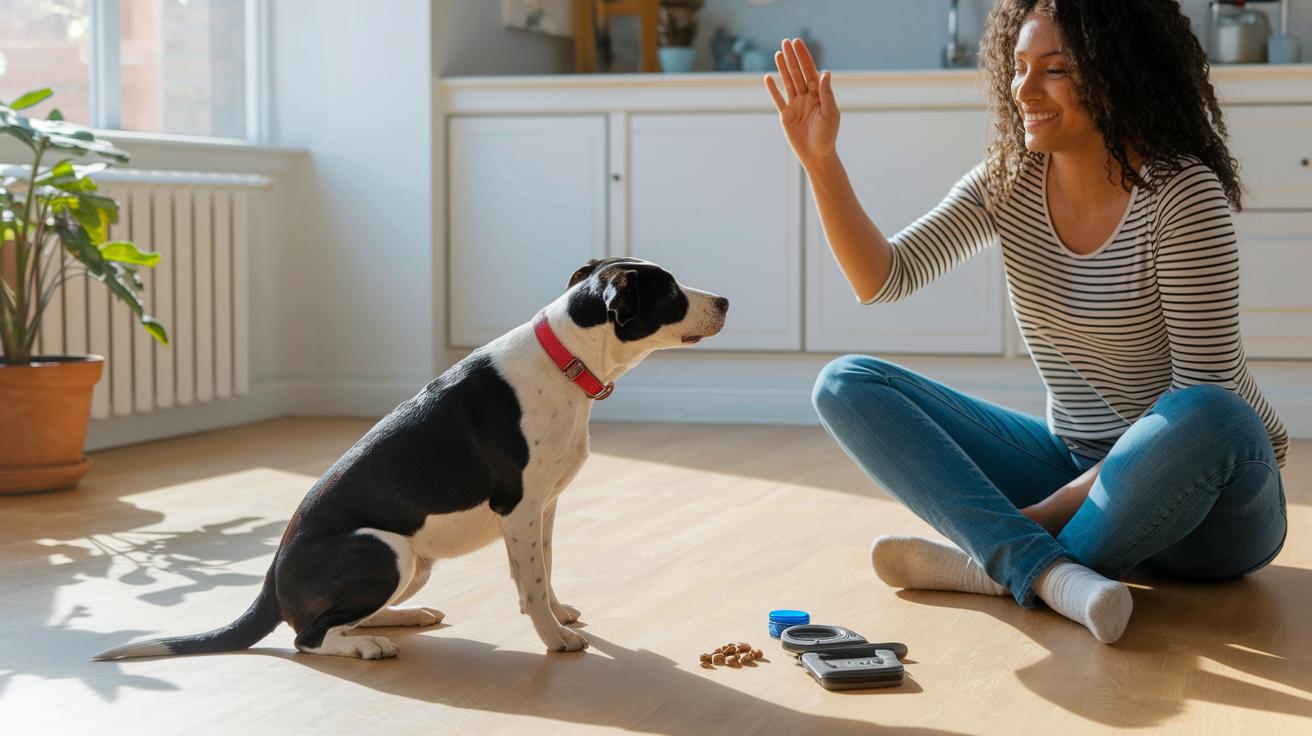
Pick a quiet spot in your home where there are no distractions. Imagine a sunlit corner where your pet rests calmly, ready for a short 5-minute training session a couple of times each day.
Choose a simple reward and a clear signal. Use a tool like a clicker or a word such as "Good" exactly when your pet shows the right behavior. Picture saying "Good" and offering a tiny, tasty treat that your pet can’t resist.
Then introduce a one-word cue along with a friendly hand gesture. For example, say "Sit" while gently raising your hand so your pet feels invited to settle down in a sitting position.
Mark the right move instantly. The moment your pet follows the cue, use your marker, whether it’s a click or a kind word, and quickly give that small treat as a reward.
Gradually raise the challenge by adding a little distraction once your pet gets comfortable. Try introducing a soft background sound during these sessions to help your pet focus even with mild distractions around.
Practice using the same cue in different calm spots around your home. Train in the living room, near a quiet window, or another peaceful area so your pet understands that the command works everywhere.
Finish each session with lots of praise or one extra treat. A cheerful pat or one last delicious reward lets your pet know that they’ve done well and keeps the training mood upbeat.
Essential Tools for In-Home Positive Pet Training
When setting up a training area in your home, it helps to choose gear that keeps your pet comfy and makes rewarding them a breeze. A flat nylon collar and a standard 6-foot leash give your furry pal a sense of security as they learn new tricks and commands. A clip-on treat pouch lets you quickly hand out a reward the moment your pet gets it right, making every training moment count. Small, soft treats are perfect for keeping your pet motivated without overdoing it, and a no-pull harness helps keep them safe during active play. Together, these tools create a calm space where your pet can learn, grow, and enjoy every step of the way.
| Tool | Purpose | Key Features |
|---|---|---|
| Flat Nylon Collar | Gives gentle control during training | Lightweight and easy to wear |
| Standard 6-Foot Nylon Leash | Offers controlled freedom | Sturdy build with a comfy grip |
| Clip-On Treat Pouch | Makes treat delivery fast | Hands-free and ready to use |
| Small Soft Training Treats | Rewards good behavior | Bite-sized and low in calories |
| No-Pull Harness | Keeps your pet safe by reducing pulling | Comfortable fit with secure support |
Overcoming Common In-Home Positive Pet Training Challenges

Sometimes, training can feel tough. When setbacks pop up, try talking to yourself as you would with a good friend. Listen closely to your pet’s little hints and adjust your approach with warmth and patience.
If your pet starts to guard their food or toys, try switching things up. For instance, if your furry friend snaps at their meal, offer a favorite toy or another treat instead. This gentle shift helps them focus on something nicer without feeling on edge.
For issues like separation anxiety or leash reactivity, small changes at home go a long way. Stick to a calm, steady routine and give plenty of praise. This combination helps lower stress during everyday transitions and keeps your pet feeling secure.
Remember, regular short sessions are key for lasting change. Practice new skills in brief, fun moments. And if you hit a wall, don’t hesitate to ask a professional for advice, they might have just the right tip for your pet’s unique needs.
Success Stories: Case Studies in In-Home Positive Pet Training
One busy family struggled with their dog's constant barking. They decided to try short, fun training sessions that came with little puzzle feeders. These games not only kept the dog busy but also gently taught him that staying quiet meant getting a tasty treat. Picture your pet happily solving a puzzle and learning that calm times lead to yummy rewards. It was a small change that brought a lot of peace and quiet to their home.
Another pet owner had a shy cat who mostly hid in quiet corners. Using a clicker as a clear signal for rewards, she encouraged the cat to come out and interact more. Every time the click went off, it meant a treat was coming, and slowly, the cat started to feel braver. Over time, this gentle clicker training helped turn timid moments into playful, social ones, making life with a once-reserved cat much more enjoyable.
One owner also saw a big difference in a dog that was once very reactive. Over eight weeks of steady, positive reinforcement, the dog's behavior transformed into calmness. The owner kept track of tiny successes each week, noticing fewer stress signals and a more steady response to commands. With every session filled with soft cues and rewards, the dog learned that new experiences could actually be fun and safe. This gradual change brought a warm sense of harmony back into the home.
In-Home Positive Pet Training vs Traditional Methods

When you use punishment-based training, you rely on fear and force to change behavior. This old way can make your pet feel scared or uneasy, and it may even damage the bond you share. Strict commands and physical corrections can cause your pet to become timid and anxious over time.
On the other hand, reward-based training uses treats and praise to encourage good choices. It feels like a friendly conversation with your pet. Studies even show that this approach can lower stress, making your pet feel happier and more confident.
Using gentle rewards not only helps your pet learn but also builds trust between the two of you. It turns training into a fun and loving time together. In truth, a little kindness goes a long way in helping both your pet's well-being and your home’s atmosphere.
Final Words
In the action, we explored force-free training basics, a step-by-step guide, and key tools that make every session fun and rewarding. We touched on handling challenges with care, sharing real-life wins that truly show progress. The contrasts between in-home positive pet training methods and old-school tactics highlighted a kinder, more effective approach. Every insight is meant to help you enjoy a more rewarding pet care experience. Here's to many happy training sessions ahead!
FAQ
What are some in-home positive pet training methods for dogs?
The in-home positive pet training methods for dogs emphasize reward-based techniques like treat commands, loose-leash walking, and calm homecomings. They use force-free principles to build trust and encourage lasting behavior change.
How does positive reinforcement differ from correction in dog training?
The positive reinforcement approach relies on rewards like treats and praise to encourage desired behaviors instead of using correction with punishment. It builds a kind, trusting bond while promoting quick learning.
What are examples of positive reinforcement training for dogs?
The positive reinforcement training examples include using treats to reward simple commands and employing a clicker to mark the right behavior. These methods create a joyful atmosphere that motivates your dog.
What is the 10 10 10 rule for puppy training?
The 10 10 10 rule for puppy training guides you to keep sessions brief, frequent, and fun. This helps your puppy learn quickly while staying engaged and stress-free.
What are the 5 D’s of dog training?
The 5 D’s of dog training cover discipline, direction, determination, dedication, and delight. They offer a simple framework to structure training sessions while nurturing positive behaviors and a warm relationship.
What is the 1 2 3 method for dog training?
The 1 2 3 method for dog training breaks behavior correction into three steps: counting mistakes, giving a cue, and redirecting to an acceptable action. It simplifies training with clear, structured guidance.
How do traditional dog training methods compare to positive approaches?
Traditional dog training methods often use dominant, punishment-based techniques, whereas positive approaches focus on rewards and trust-building. This shift reduces stress and helps your dog learn in a supportive environment.