
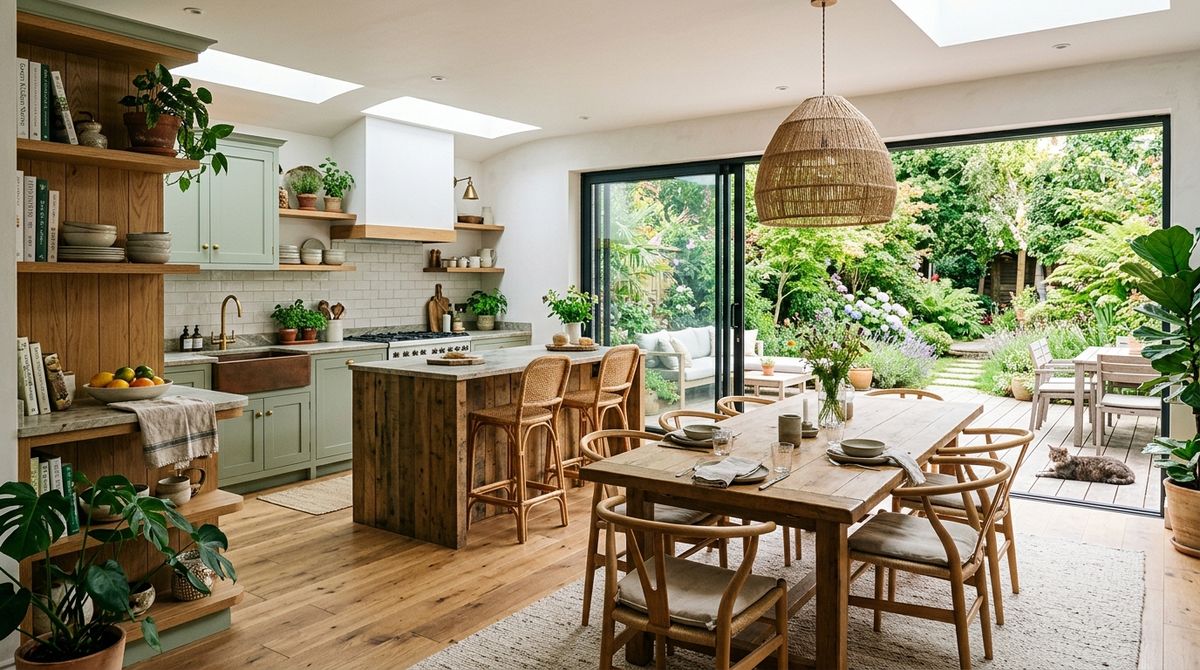
Learning at home does not have to mean a formal classroom with a fixed timetable. Families can build curiosity and useful skills through small chores that happen throughout the week. When children help with practical tasks, they practice reading, measuring, planning and problem solving without feeling that they are doing schoolwork.
The chores below follow the seasons because each part of the year offers different materials and opportunities. Some tasks suit the garden, others suit the kitchen or the storage cupboard. Choose the ones that fit your home, and adjust the difficulty so every child can contribute.
Spring Garden and Sorting Jobs
Spring gives families plenty of outdoor work to share. Children can plant seeds in small pots, label each row and measure how far the seedlings grow over several days. Simple records, drawn or written, turn gardening into a gentle science activity.
Indoors, spring cleaning offers its own lessons. Ask children to sort clothes by size, group toys by type or match socks in a basket. Sorting builds classification skills and makes the next task easier, because everything has a clear place.
Readers may also want to visit Revamphomegoods.com. Those ideas can be adapted to whatever supplies the home already has.
Summer Kitchen and Measuring Tasks
Summer kitchens are full of chances to practice measurement. Let children weigh fruit, measure water for drinks and compare the sizes of different containers. Ask them to predict which jug holds more before they check, then talk about why their guess was right or wrong.
Cooking also teaches patience and sequence. Children can read a simple recipe, arrange ingredients in order and clean up in the right steps. Each finished dish becomes a small reward for the effort.
You can also visit homesmoving.org for more reading. Those guides often explain how to supervise safely while still giving children real responsibility.
Autumn Reading and Record Keeping
Autumn is a natural time for reading and writing. Set up a basket of books near the sofa, and invite each child to choose one story to read aloud. Ask simple questions about the characters and the setting, and let children answer in their own words.
Create a family journal for weather notes, leaf collections or observations from walks. Children can draw pictures, record temperatures from a thermometer and write short sentences about what they noticed. Over time, the journal becomes a meaningful record of the family’s seasons.
For a related read on this site, see Comparing Written Quotes Before Hiring Any Local Trade.
Winter Planning and Shared Goals
Winter is a good season for planning. Gather the family and ask each person to name one skill they would like to build before the next season arrives. Write the goals on a large sheet of paper and place it where everyone can see it.
Assign small roles that support those goals. One child might track the weekly reading list, another might plan the next baking project and a third might organize the craft box. Shared responsibility gives children a sense of purpose and turns learning into a family habit.
Home learning works best when it feels natural and rewarding. Each season offers new materials, new questions and new ways to practice useful skills. With a simple rhythm of chores, the house becomes a place where curiosity grows every day.
Try pairing chores with simple questions that invite thinking. While folding laundry, ask why some fabrics dry faster than others. While setting the table, ask how many plates are needed if one guest arrives late. Gentle questions like these turn ordinary tasks into moments of discovery, and they encourage children to explain their reasoning.
Give children the chance to teach something they already know. An older sibling can show a younger one how to tie a knot, measure a cup of flour or sort a box of pencils by color. Teaching others builds confidence, and it strengthens the relationships that make learning at home feel safe and supportive.
Keep learning materials visible and easy to reach. A small shelf with puzzles, a box of art supplies and a few reference books invites children to explore on their own. When resources are close at hand, curiosity has room to grow without much adult direction.
Finally, celebrate effort more than perfect results. A drawing that does not look quite right or a measurement that needs a second try still shows that a child is thinking and trying. Recognizing that persistence helps children enjoy learning, and it keeps the home a welcoming place for new ideas.
Set up a family display board where finished projects can hang for a while. A drawing, a short story or a pressed leaf collection gives children a visible sign that their work matters. Rotate the display regularly so that new pieces replace old ones, and invite each child to explain their favorite item to the rest of the family.
Consider keeping a small box of materials that anyone can use without asking. Scissors, glue sticks, colored paper, a magnifying glass and a few blank notebooks make it easy to start a project at a moment’s notice. Ready access to simple supplies often sparks the kind of spontaneous learning that formal lessons struggle to create.